How To Use Super Glue On Plastic
Follow these steps when using super glue on plastic.
.webp)
Best Super Glue For Plastic
For rigid, high surface energy plastics, Gorilla Super Glue Gel is the best option. The gel viscosity gives you control on curved or vertical plastic parts where thin liquid would run, and the Impact-Tough formula handles the bumps a repaired plastic item tends to take. Use the Micro Precise applicator for small clips and hobby parts.
There are also three additional types to choose from, depending on what your job requires: Liquid, Ultimate, and Brush & Nozzle.
Why Some Plastics Will Not Bond With Super Glue
Plastics differ in something called surface energy, which controls how well a liquid can spread out and grip the surface. Low surface energy plastics resist almost everything you put on them. Higher surface energy plastics bond readily.
How to use super glue on plastic
Step 1: Identify your plastic type
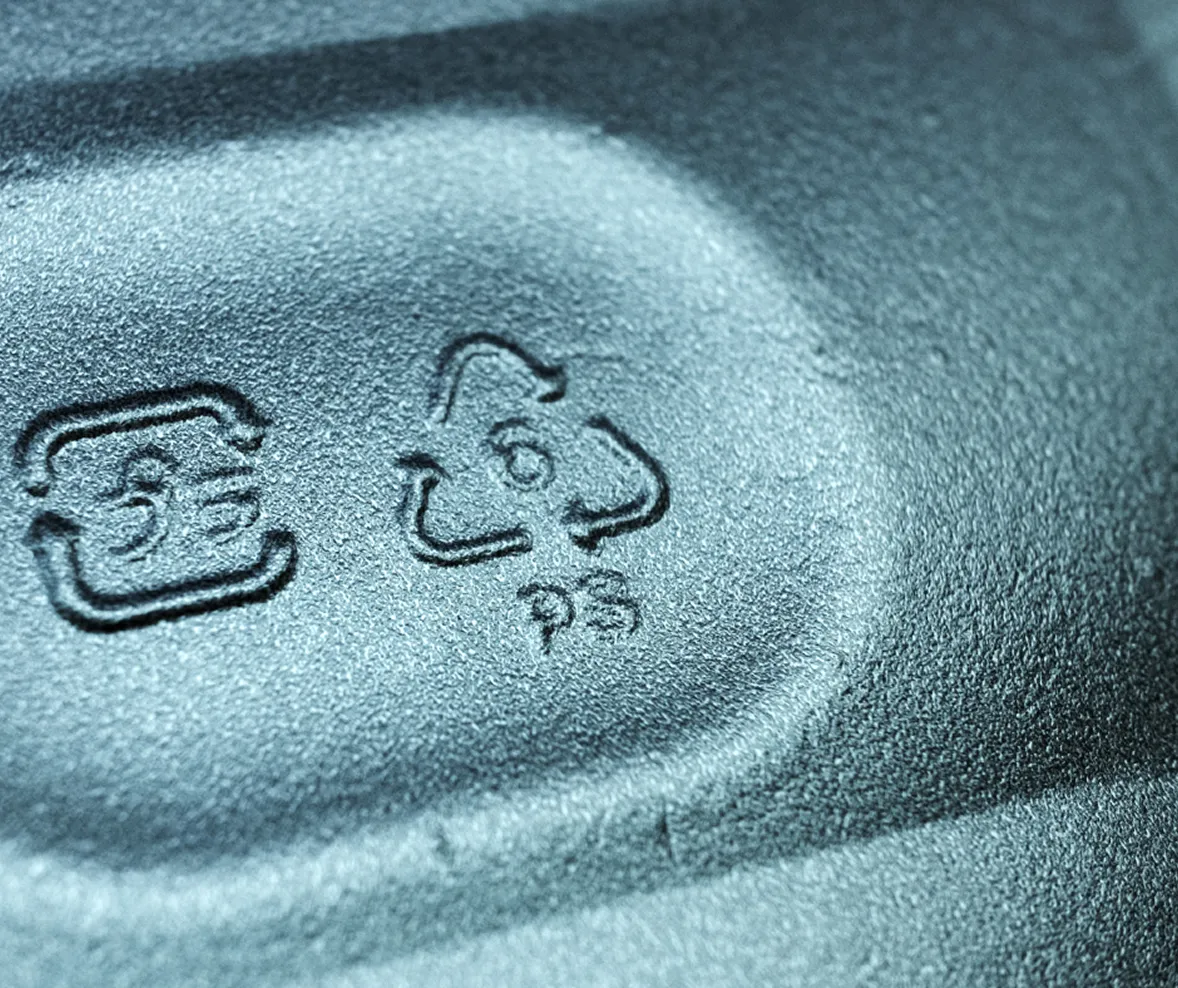
The easiest way to identify the plastic is to look for the material type symbol, which usually consists of a triangle of arrows with a number in the center. That number tells you the plastic type, which will help you determine if super glue will work.
With low surface energy, these plastics WILL NOT reliably bond with regular super glue:
- Type 1: Polyethylene Terephthalate (PET)
- Type 2: High-Density Polyethylene (HDPE)
- Type 4: Low-Density Polyethylene (LDPE)
- Type 5: Polypropylene (PP)
- Type 6: Polystyrene (PS)
For these plastics, consider using a specialty plastic adhesive.
Step 2: Choose the right formula (see below)
Step 3: Prep
Make sure both surfaces are clean and dry.
Step 4: Application
Apply a small drop, press the pieces together, and hold for 10–45 seconds. Avoid stressing the bond for the first few minutes, and it'll reach full strength within 24 hours.
Notes:
- LESS IS MORE - only 1 drop of glue needed to cover a square inch
- Excess glue, gaps, and uneven surfaces may cause delayed or failed bonding
- Super glue is NOT WATERPROOF
Choose the right formula
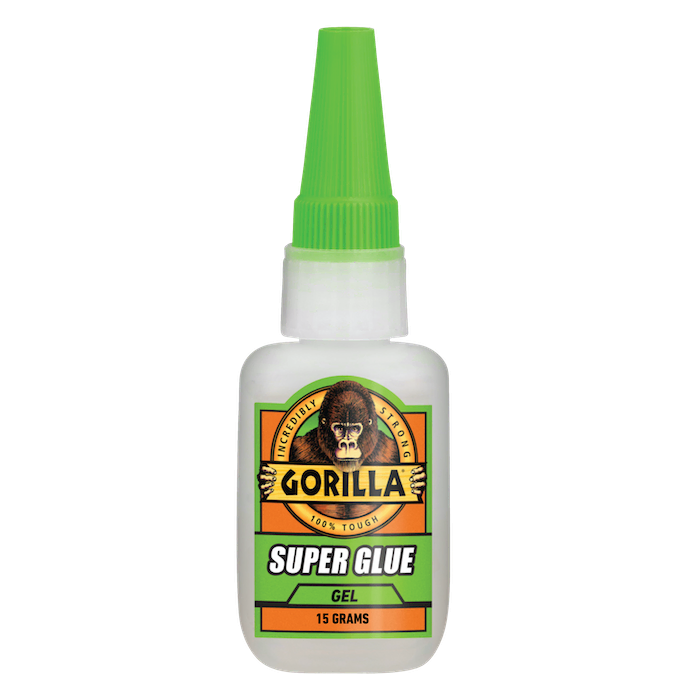
Gorilla Super Glue Gel
Designed for vertical surfaces and precise placement. No drips, more control.
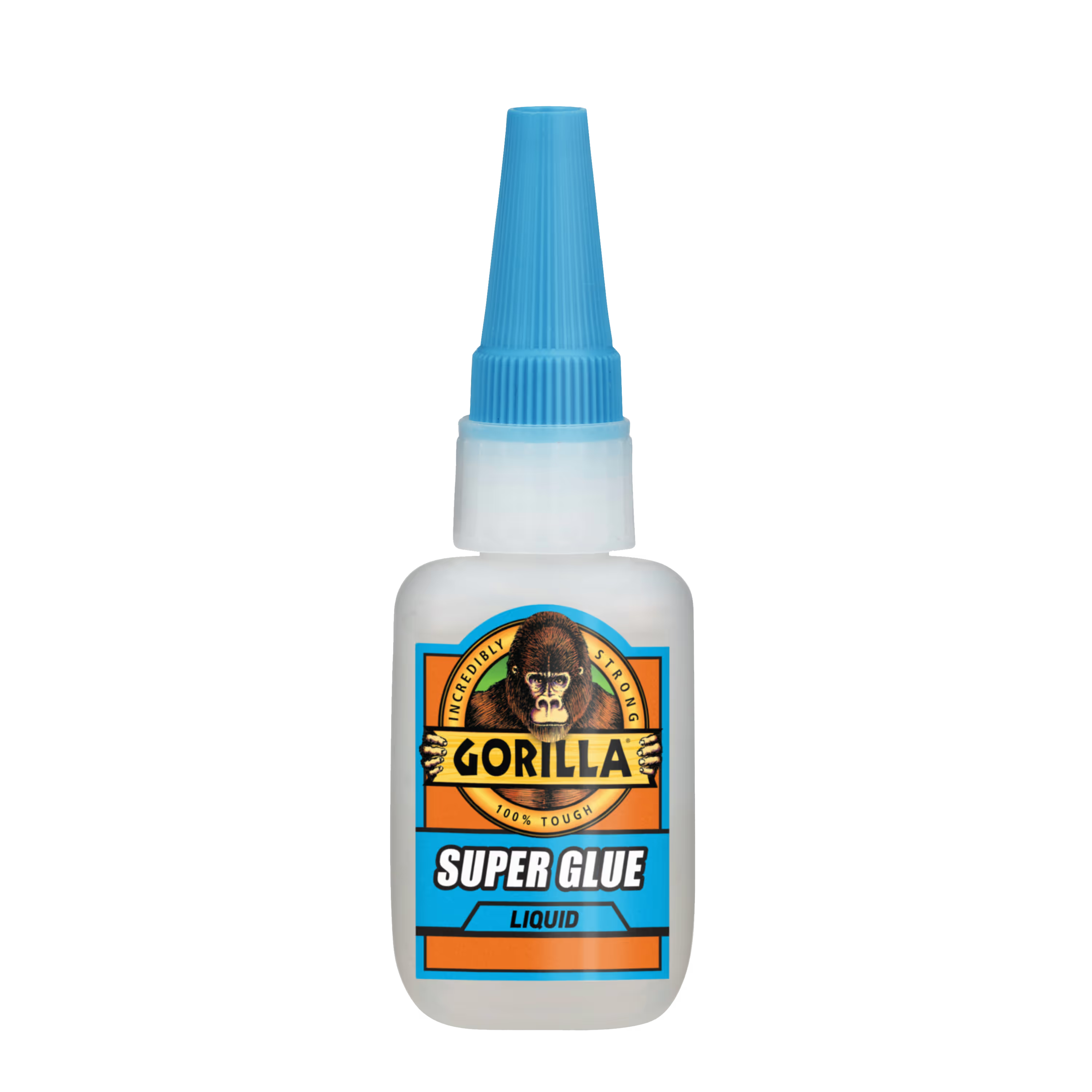
Gorilla Super Glue Liquid
Fast-setting strength for everyday household repairs.
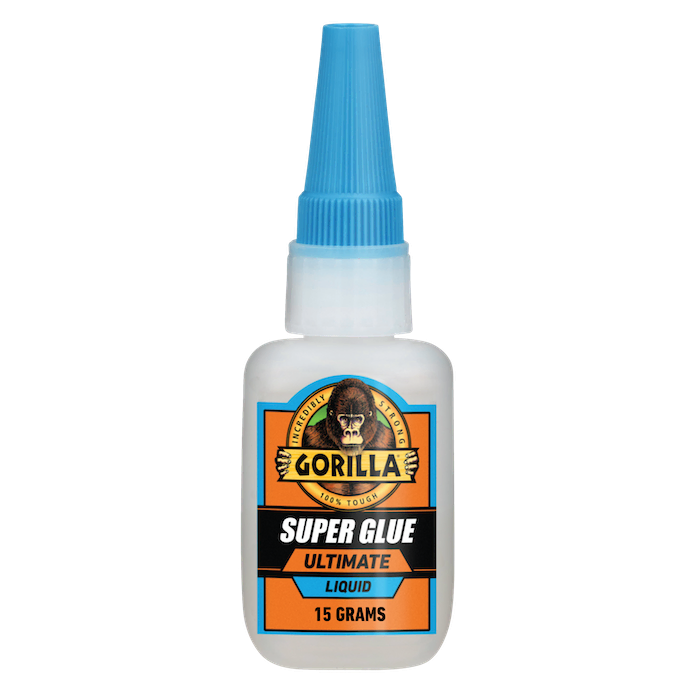
Gorilla Super Glue Ultimate
Our strongest, most durable Gorilla Super Glue for frequently handled or knocked items.
.webp)
Brush & Nozzle
Two easy ways to apply: a precision tip nozzle and fine bristle brush.